Reviewing 12 OT Illustrations for Digital Sales
As a digital product creator who has spent years navigating the complexities of Etsy, Creative Fabrica, and print-on-demand platforms, I approach every new graphic design asset with a critical eye. It is not enough for an image to look pretty; it must sell. Recently, I evaluated a specific collection titled 12 Occupational Therapy Illustration to determine its viability for my upcoming healthcare-themed product line. This review breaks down how these assets perform in real-world commercial scenarios, from sublimation prints to Canva templates.
First Impressions and Visual Personality
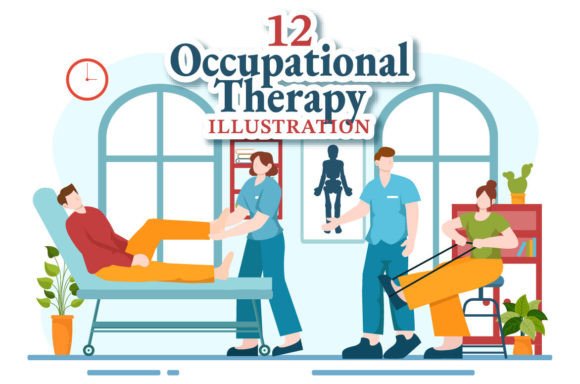
Upon opening the file package, the immediate impression was one of professional warmth. The Occupational Therapy Vector Illustration with Treatment Session on Screening Development of Person and Medical Rehabilitation in Healthcare Background Suitable for Poster, Web Banner, Brochure, Landin description accurately hints at the utility, but the visual reality is more nuanced. The style strikes a balance between clinical professionalism and approachable care. It is not overly cute or childish, which makes it versatile for adult rehabilitation contexts, yet it retains enough softness to be welcoming for pediatric therapy settings.
The color palette leans towards calming blues, greens, and neutral tones, which are standard in medical branding but executed here with a modern flat-design aesthetic. For sellers targeting the healthcare niche, this mood is crucial. It conveys trust and competence without feeling sterile. This visual personality attracts buyers looking for authentic representation of therapy sessions, rather than generic stock photos that often feel disconnected from the actual patient experience.
Commercial Applications for Online Sellers
The true value of any digital product lies in its versatility. I tested these twelve illustrations across various product types to see where they shined. Here is how they perform in different commercial applications:
- Printable Wall Art and Posters: The high-resolution nature of these files makes them ideal for clinic decor. Therapists often seek art that reflects their profession, and these illustrations serve as excellent printable design options for waiting rooms or therapy offices.
- Canva Templates: By importing these PNGs into Canva, I created brochure and flyer templates for private practice owners. The transparent backgrounds allowed for easy layering over text boxes, enhancing the visual hierarchy of the marketing materials.
- Sublimation Design: For those using heat presses, these images work well on tote bags and mousepads. The clean lines ensure that the ink transfer remains sharp, avoiding the blurriness that plagues lower-quality clipart.
- Social Media Graphics: Bloggers and clinic managers can use these for Instagram carousels explaining therapy benefits. They break up text-heavy posts and add a professional touch to social media graphics.
For Cricut project enthusiasts, the vector quality is a significant advantage. While these are primarily illustrative rather than simple cut files, they can be used for larger decals on water bottles or laptop skins. However, sellers should note that intricate details may require careful weeding if used for vinyl cutting.
Enhancing Product Presentation and Brand Identity
In the crowded marketplace of creative marketplace listings, thumbnail appeal is everything. Using these illustrations in your product mockup previews can significantly boost click-through rates. When I placed one of the therapy session illustrations on a mockup of a framed print, the perceived value increased immediately. It looked like a premium, custom-designed piece rather than a generic template.
Consistency is key to small business branding. If you are building a bundle of healthcare-related resources, using a cohesive set like 12 Occupational Therapy Illustration ensures that your brand identity remains strong. Customers are more likely to purchase a full bundle when they see that the visual style is uniform across all items. This builds customer trust and encourages higher average order values.
Strategic Placement and Cautionary Notes
While these assets are robust, they are not a one-size-fits-all solution. Understanding where to use them—and where to avoid them—is part of being a savvy seller. These illustrations work best in layouts that allow them to breathe. Use them as focal points in packaging design for therapy kits or as header images for Etsy product listings. They excel in medium-to-large formats where the details of the treatment session and rehabilitation equipment are visible.
However, exercise caution in the following scenarios:
- Tiny Sticker Details: If you are creating mini sticker sheets, the intricate details of the therapy equipment may get lost. Simplify or crop the image heavily for small-scale sticker design.
- Dark Backgrounds: Depending on the specific colorway of each illustration, some may lack sufficient contrast against dark backgrounds. Always test your PNG design on both white and black canvases to ensure visibility.
- Text-Heavy Templates: Do not place these illustrations behind dense paragraphs of text. They are busy enough to distract readers if not positioned carefully. Use them as sidebars or header accents instead.
Practical Seller Tips for Implementation
Before listing any product featuring these assets, I recommend a rigorous testing phase. First, verify the commercial license terms. Ensure that your intended use, whether for physical goods or digital download items, is covered. Next, inspect the file resolution. For print-on-demand, you need at least 300 DPI to avoid pixelation on mugs or t-shirts.
Typography pairing is another critical factor. These illustrations pair well with clean sans-serif fonts for a modern medical look, or friendly handwritten fonts for a more personal, caregiver-focused vibe. Avoid overly decorative script fonts that might clash with the professional tone of the illustration.
Finally, organize your files clearly for your customers. If you are reselling these as part of a design bundle, include a readme file with usage tips. This adds value and reduces customer support queries. By treating these design assets as integral components of a broader business strategy, you can maximize their ROI. Whether you are creating a t-shirt design for occupational therapists or a mug design for rehab centers, the key is to align the visual message with the buyer’s emotional needs. This collection offers a solid foundation for doing just that, provided you apply it with strategic intent.